Childhood memories of my mother revolve not around her clothes or her hair but her sunglasses. As I grew, so did her glasses, moving from the lightweight metal Polaroids of the 1960s (‘We all wanted those,’ she recalls) to the flamboyant butterfly frames of her 1970s Correna Photomatics.
I succumbed to my first pair of shades aged 18 on a trip to the USA: the classic Ray-Ban Wayfarers, first launched in 1952. They were effortlessly chic and as soon as I popped them on, I was transformed into Audrey Hepburn à la Breakfast at Tiffany’s… or so I liked to believe.
Aficionados look back with affection at frames from the 1930s-60s, when joints were hand-pinned, plastic frames carefully edged and sunglasses had an unmistakable weight and presence. The result was a purchase that, just like a food mixer, refrigerator or television set, was built to last. A 1950s pair of exotically named Holidays, Bahamas or Myths could quite conceivably have taken a young girl from her teens to marriage.
And that’s the joy of vintage sunglasses – the idea that by wearing a pair, you’re unlocking that tale and reliving their heyday. So on that note, remind me to put in a bid for my mother’s Photomatics. I’m just about ready to realise their slogan and feel: ‘So original, so futuristic, in fact, so beautiful.’
When did sunglasses first appear?
The origins of sunglasses are as shady as the tints themselves. Slitted snow goggles, carved from caribou antlers, have been found in prehistoric Inuit graves, while in 1AD, Pliny the Elder referred to Emperor Nero viewing ‘the combats of the gladiators upon a smaragdus’ (meaning a green mineral, likely to have been an emerald). References from 12th-century China mention judges using smoky quartz lenses to hide their expressions from witnesses – something today’s A-list celebs have worked hard to imitate!
In the 1740s, beneath the sign of the Great Golden Spectacles on London’s Ludgate Street, eminent optician and instrument maker James Ayscough dispensed coloured glass ‘for remedying all the different defects of sight’. His ideas were taken a stage further by the brilliant scientist Sir William Crookes, whose tinted glass mixture, unveiled in 1913, dramatically reduced UV exposure and prevented glare for ‘people exposed to… sunlight reflected off cliffs, snow, or even electric light.’
Even by the early 20th century, it was medical purposes, rather than fashion, that drove the industry. That all changed in 1929, when US firm Foster Grant, floundering after the popularity of the short ‘flapper’ haircut wiped out demand for its celluloid combs, found a new direction mass-producing sunglasses. The first pairs were sold over the counter at Woolworths in Atlantic City for just 10c a piece, and a craze was born.
When did sunglasses come into fashion?
The real turning point in Britain came just after World War II, when Vogue magazine devoted its August 1946 cover to sunglasses. In stark contrast to the round, unisex frames that were common at the time, the colours and styles pictured – an alluring array of feminine brow-liners and cat’s eye frames – were seriously exciting. The message was loud and clear: you simply had to own a pair, especially if a holiday was on the cards.
Increasingly, it was. Where there was sun, there had to be sunglasses, and they were a recurring motif in transport posters of the time. A swimsuit-clad beauty, sunglasses in hand, lured holidaymakers to Prestatyn (for the London Midland Region railway) while, for American Airlines, a bronzed, bikinied girl, complete with sunglasses, gave the impression that it never rained in Los Angeles.
Elsa Schiaparelli’s flamboyant frames with blue feathered eyelashes, pictured in Life magazine in 1951, kick-started the idea of fashion-branded sunglasses, which drives the industry today. Other fashion houses, such as Dior, soon followed suit with exclusive branded ranges of their own. It was good timing: advances in plastics manufacture (injection-moulded cellulose acetate and nylon were commonplace) meant owning a pair of sunglasses was now a realistic possibility for many people.
The biggest boost to the sunglasses industry in the post-War era came from Hollywood. Marilyn Monroe famously hid behind her Wayfarers – on the beach, in her sports car and even in coffee shops. One of the first ‘paparazzi’ victims, pictures were beamed worldwide and helped to reinforce consumers’ loyalty to the brand. In the 1960s, Foster Grant tied up the first celebrity endorsement deals with their ‘Sunglasses of the Stars’ ad campaign, which saw A-listers such as Raquel Welch and Woody Allen striking seductive poses above the tag line, ‘Who’s that behind those Foster Grants?’ as you can that you get a real feel for the age of sunglasses. Pairs from the 1930s to the 1960s will probably have glass rather than plastic lenses, so are noticeably heavier than today’s equivalents (although Ray-Ban’s Air Corps-inspired Aviator frames weighed in at just 150g). Pre- and post-War frames are reassuringly solid, with die-cut plastics and hand-etched signatures. The hinges in particular can reveal clues – they shouldn’t be lightweight, flimsy or gleaming, which indicates a suspicious lack of wear.
By the 1950s, plastics were injection moulded in a range of exotic colours. The shapes of frames also help with dating. Huge, Jackie O-style glasses are the archetypal 1960s look. During the same period, Polaroid lenses become popular too, as did heavyweight black plastic frames with chamfered rims, wraparound sides and grey lenses. Sunglasses from the 1970s hide even more of the face as frame sizes exploded, often with photochromatic or graded tint lenses.
What should I pay?
If vintage 1950s is your thing, you can find a less well-known style from a famous brand (such as Dash or Dune by Ray-Ban) for under £100. For a similar price, you may find unmarked, good-quality frames that evoke all the decorative detailing of the era. The 1960s and 70s produced plenty of middle-market brands that capture the zeitgeist, which now sell for around £195. Quality 1980s frames by makers such as Alpina and Cazal (think mixed plastics and faux gems for women and fast car-inspired styling for men) are currently hot news as pop and rap artists snap them up. Prices can reach over £300 for individual pairs. Of course, as soon as there’s a link with Hollywood’s elite, prices rise. An original pair of 1960s Persol 714s (the folding shades worn by Steve McQueen in The Thomas Crown Affair and The Getaway) could fetch £5,000. McQueen’s own custom-tweaked frames still hold the record for the highest price paid at auction for a pair of sunglasses: $70,200.
Is it okay to wear them?
I’ve yet to find a collector who doesn’t adore wearing their shades, even at the top level – though there is a debate about the quality of vintage lenses. Some dealers argue that quality vintage pieces by the likes of Persol and Bausch & Lomb exceed current UV regulations. Others offer to replace original lenses with modern prescription lenses – my favourite store for this is Arckiv Vintage Eyewear in London. It’s worth remembering that plastic can become brittle over time and excessive wear could result in damage, so wear your favourite pairs in rotation.
KEY NAMES
1
PERSOL EYEWEAR
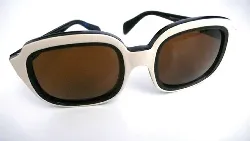
Set up by Giuseppe Ratti in 1917, Persol (after per il sol meaning ‘for the sun’) shades ooze quality. Well into the 1950s, its crystal lenses, most notably yellow-brown, were still hand-engraved and hand-finished with gold script on the stems (white indicates a later date). It’s worth hunting down 1970s pairs, which are tagged at a few hundred pounds.
2
BAUSCH & LOMB
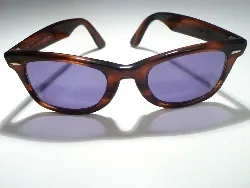
The first firm to market its sunglasses under a brand name – Ray-Ban (to banish rays), which was patented in 1937. The Aviator style, distinguished by its teardrop frame and anti-glare green glass lenses, has become a classic. Ray Ban opened a UK factory in 1958, and countless Hollywood stars wore the firm’s designs.
3
FOSTER GRANT
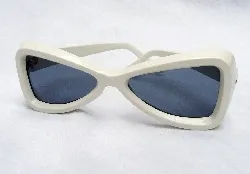
US giant Foster Grant sold its first pair of sunglasses in 1929. They were the first optical firm to use injection moulding and their styles were very much mass market. Today they make a good and cheap starting point.
4
POLAROID
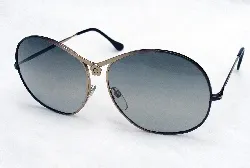
Polaroid was a great favourite of millions, my mother included. An American, Edwin Land, patented a film that could block certain light rays and eliminate glare. In 1937 he founded the Polaroid Corporation, which went on to dominate the middle market in the 1960s with its polarised sunglasses. They were widely sold in chain stores, local garages and even Post Offices.
5
DIOR
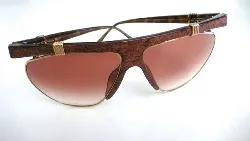
After Schiaparelli, Dior lead the way with its branded eyewear. Still one of the leading sunglasses manufacturers today, there’s strong demand for vintage examples. Synonymous with luxury, the brand has traditionally used enamelling and gemstones to create sunglasses that resemble jewellery. Vintage pairs from the 1970s have a hip-hop following and prices hover around £225 a pair.
AN INVESTMENT
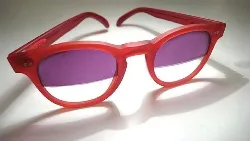
With most sunglasses now mass produced in the Far East, it’s refreshing to find two firms prioritising quality. Jason Kirk’s ‘Kirk Original’ brand is inspired by vintage spectacles, and already popular with Elton John, Paul Weller and Robbie Williams. His ‘Jean’ sunglasses frame (below, from £220) recently won the coveted Silmo D’Or award (an Oscar in the eye world).
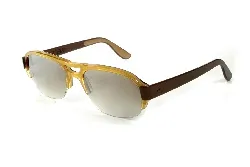
Vidal Erkohen’s RVS by V sunglasses (bottom) pay homage to vintage greats. Handcraftsmanship is paramount and the result is a range that’s increasingly sought-after (prices from $300).
FIND OUT MORE
BUY
- Arckiv Vintage Sunglasses Unit 87A, Stables Market, Chalk Farm Road, Camden, London, 07790 102204. A fabulous choice of post-War sunglasses. Prices from £95
- glasseswebb.com Run by two US-based Brits who share a passion for vintage eyewear with a focus on high-end 1970s, 80s & 90s designs from the likes of Alpina & Cazal. Prices from £150
- rarevintagesunglasses.com Owned by Turkish designer and connoisseur Vidal Erkohen (see ‘An Investment’). Top-quality early originals by the likes of Persol and Ray-Ban. Prices from £150
- klasik.org. A wide range of glasses and frames from brands including Ray-Ban and American Optical. Also at Spitalfields Market, London, every Sunday
- Cutler and Gross Vintage. 7 Knightsbridge Green, London. 020 7590 9995. A wide range of vintage styles from Cutler and Gross as well as other top names
VISIT
- The British Optical Association Museum, The College of Optometrists, 42 Craven Street, London. 020 7766 4353. A fascinating visit but be sure to make an appointment in advance

