
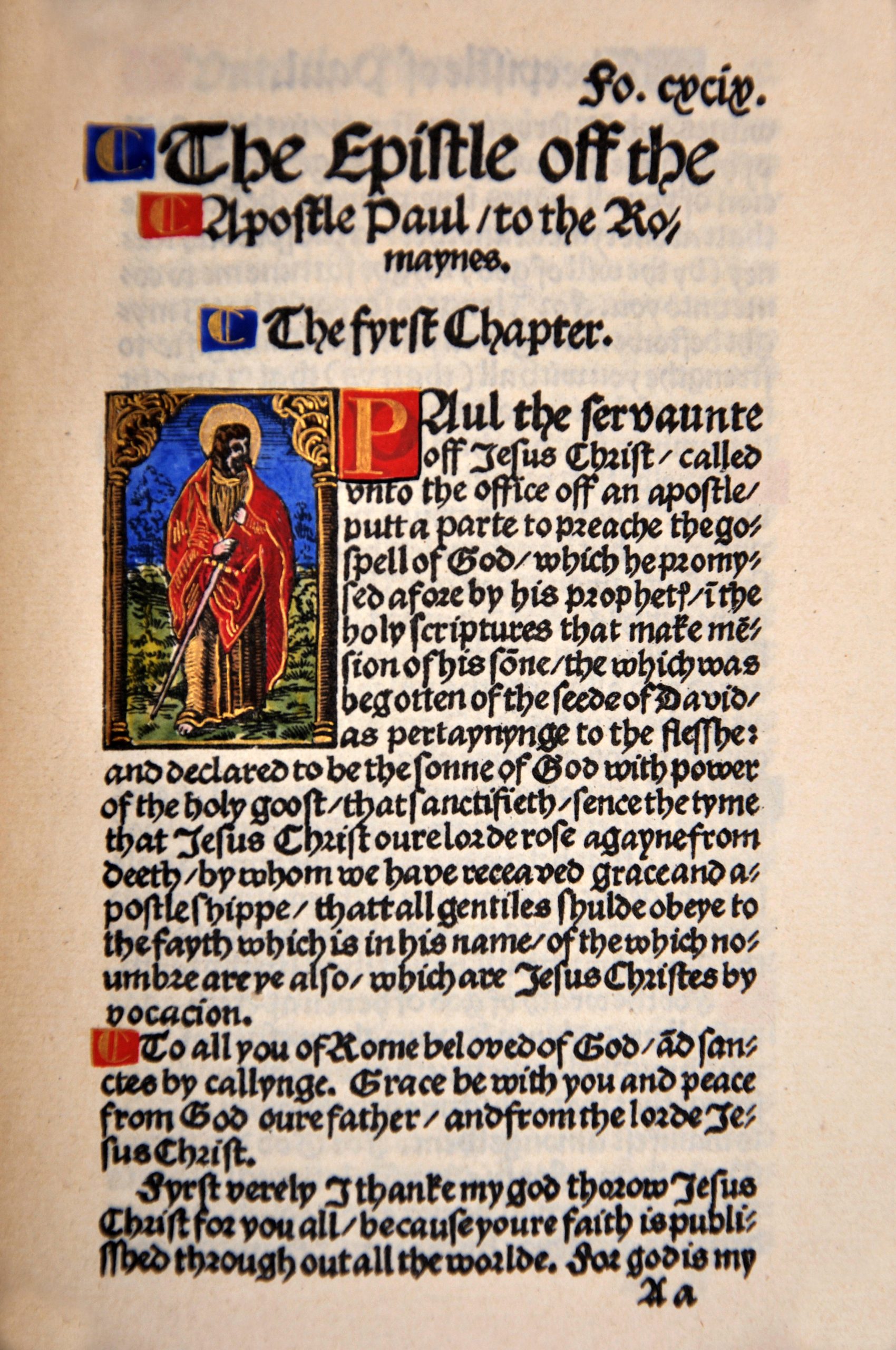
Tyndale’s New Testament Bible
Last time you stayed in a standard UK chain hotel, chances are you would have found an English Bible in the bedside drawer if you’d looked. But, 500 years ago, no such thing existed – the holy book was only available in Latin, Hebrew and Greek. It was inaccessible to the vast majority of the populace, and this is exactly how the church and crown wanted it.
Educated at Oxford and Cambridge Universities, English theologian and linguist William Tyndale believed that, from ploughboy to monarch, everyone should be able to read the Bible. In 1524, against the wishes of Bishop Cuthbert Tunstall, he set about translating the New Testament into English. To get away from the growing hostility to his plan, he fled to Hamburg, finished his translation and began printing in secret.
In 1526, the first copies landed in England. They were immediately condemned by the authorities, with as many copies being bought up and burned as possible. Only three copies are known to have survived the raid, with one being held by the British Library and another by St Paul’s Cathedral. Tyndale was accused of heresy by the church and later King Henry VIII himself (Tyndale was opposed to Henry’s divorce).
After eluding the powers that be for almost a decade, in 1535 he was arrested, imprisoned and in 1536 he was burned at the stake. Yet his legacy lives on in every English translation that has followed. Tyndale spearheaded a Protestant reformation whose ripples were felt throughout the English-speaking world.
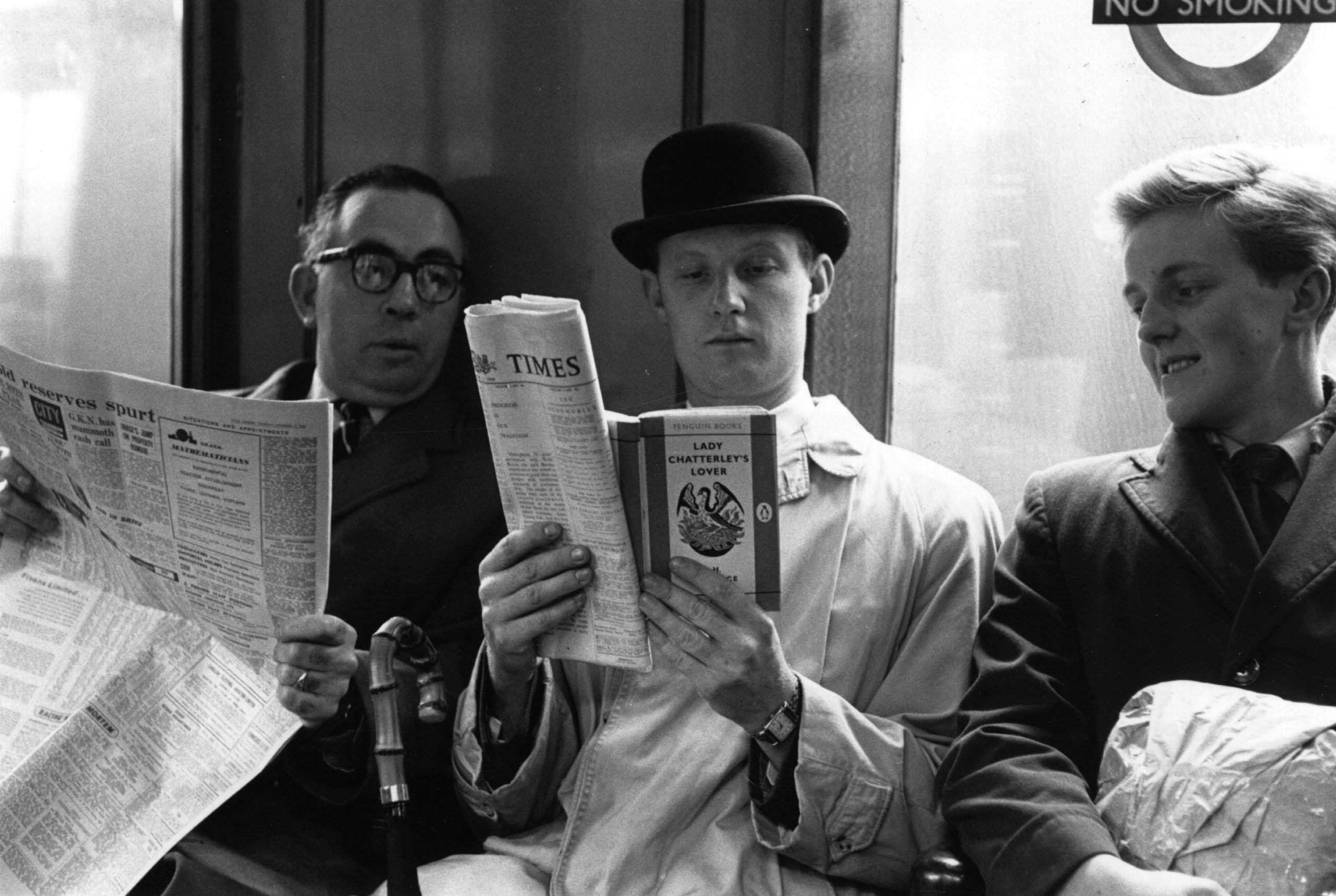
Lady Chatterley’s Lover by DH Lawrence
Is it a book you would have lying around your house? Is it a book you would even wish your wives and servants to read?’ asked Mervyn Griffith-Jones, leading the prosecution in the 1960 trial brought by Penguin Books. The book in question was Lady Chatterley’s Lover by DH Lawrence, which had been published privately in 1928 in Italy and then France, but was unavailable to buy in its complete, uncensored form in Britain. The reason? It was deemed too scandalous for the general public.
The novel centres around an upper-class woman, Connie, the eponymous Lady Chatterley, whose husband has been left paralysed from the waist down after fighting in the First World War. Finding him cold emotionally, she seeks sexual gratification elsewhere, leading her to the couple’s gamekeeper, Oliver Mellors. Their passionate secret encounters and Connie’s exquisite embrace of physical intimacy is detailed explicitly.
Ironically, while Lawrence’s intention was to make the sex in the book appear precious and lacking any tinge of shame, this ‘dirty book’ was branded the exact opposite by stuffy lawmakers. However, after 30 years of the full manuscript being under wraps, Penguin Books made history by having the ban of Lady Chatterley’s Lover overturned. On its first day of sale after the trial, British bookshops sold out of all 200,000 copies, going on to sell two million copies a month later.
This was perhaps the catalyst for the rest of the decade, which saw the contraceptive pill being made available to all women in 1961, the decriminalisation of homosexuality in 1967, and the Divorce Reform Act of 1969.

Ulysses by James Joyce
With its complex grammatical structure, including a soliloquy that stretches over 38 pages, and an abundance of enigmatic words and phrases, Ulysses has never been a book for the fainthearted. The stream of consciousness format tracks a single day in the life of Leopold Bloom. The book’s title relates to Bloom’s adventures echoing those of Homer’s epic hero.
Throughout, the inner thoughts and desires of Bloom, his wife, Molly, and another central character, Stephen Dedalus (Joyce’s alter ego), are laid out in a series of monologues. Due to the belief that the novel would encourage readers to have ‘impure and lustful thoughts’ it was banned in the US and Britain (and so became unavailable in Australia, South Africa, New Zealand and Ireland) on the grounds of immorality. It duly gained cult status, with copies being smuggled via Paris.
Early readers of the novel were Virginia Woolf and her husband, Leonard. Virginia wrote to her brother-in-law, Clive Bell, in April 1922 to say she’d bought a copy of Ulysses for £4. ‘I have him on the table. His pages are cut. Leonard is already 30 pages deep. I look, and sip, and shudder.’
However, in December 1933, 11 years after Ulysses was first published, the ban in the States was overturned by a certain Judge Woolsey, who came to the conclusion that the book was not pornographic, or ‘dirt for dirt’s sake’, and in fact a work of literary merit. Britain followed suit in 1936.
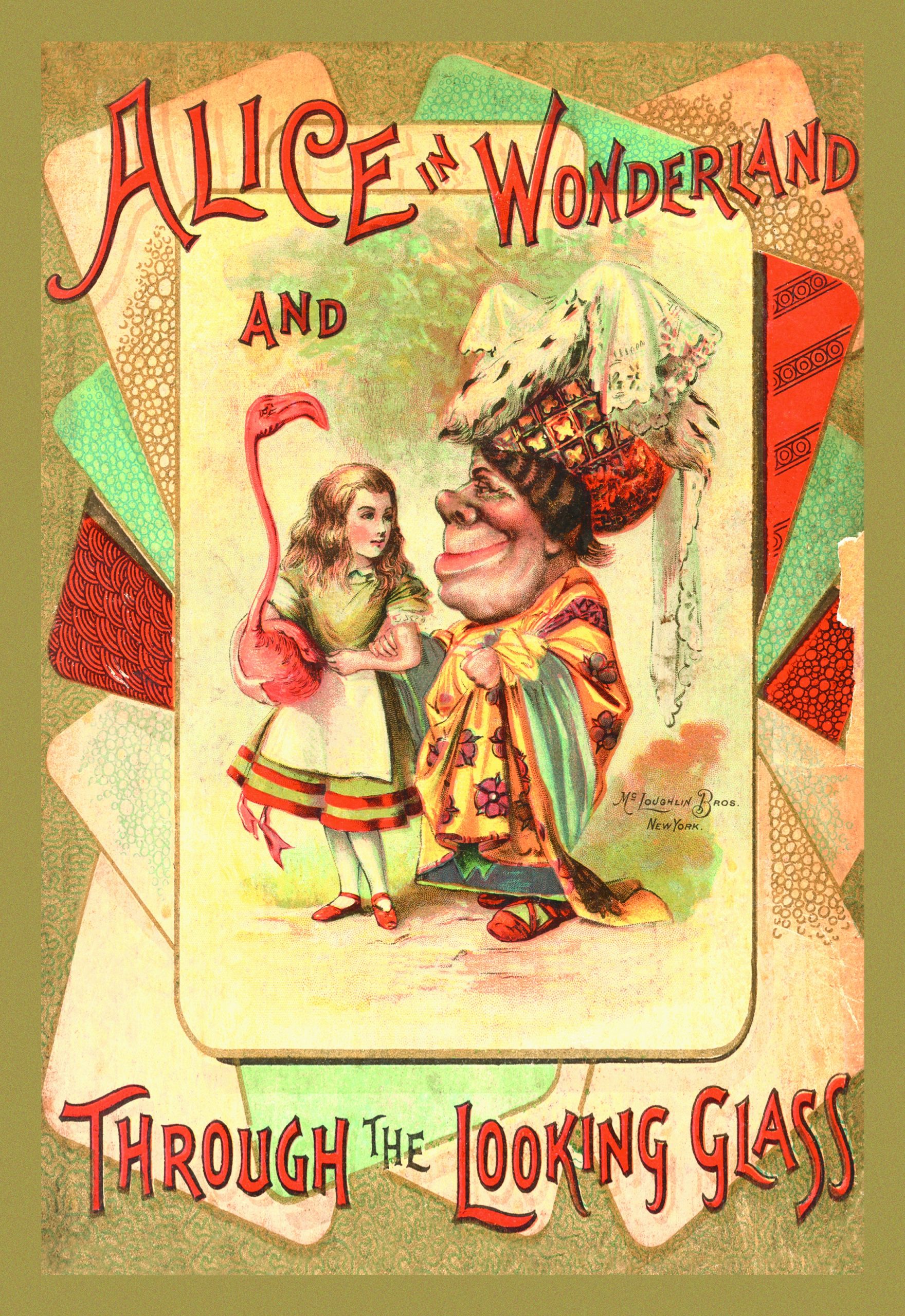
Alice’s Adventures in Wonderland by Lewis Carroll
It’s just a whimsical children’s book, I hear you gasp, how on earth could sweet little pinafored Alice and her roster of memorably quirky characters be remotely offensive? The magical tale of Alice tumbling down a hole after a clock-watching waistcoated white rabbit, and growing larger and smaller through morsels of cake and bottled drinks as the story progresses, has captivated generations of small children and their parents since 1865.
But in 1930s China, the book was seen as anything but cosy and wholesome. The government at the time believed that depicting animals as quasi human, dressing and speaking the same language, was insulting, proclaiming it was ‘disastrous to put animals and human beings on the same level’. The creep of Western influence was considered too much and several other foreign literary works joined Alice’s ranks of being prohibited.
Meanwhile, in 1960s USA, in part thanks to the 1951 Disney film adaptation, various schools turned their attention to the philosophical caterpillar and his exotic hookah pipe. Fearing that, influenced by the rude and standoffish butterfly-in-waiting, children would be prompted to try hallucinogenic drugs, the book was banned by several educational institutions.

Are You There God? It’s Me, Margaret by Judy Blume
A seminal coming-of-age go-to for many girls growing up in the Seventies and Eighties, Judy Blume’s 1970s novel portrays pre-teen angst with refreshing honesty. In a world where once there was precious little information about what happens to your body during puberty, outside some basic school biology lessons, talking to your friends and possibly your mum, this book was a godsend.
The story centres on main protagonist Margaret, an 11-year-old girl who moves with her Christian mother and Jewish father to New Jersey. Given her parents’ differing religious beliefs, Margaret is given the freedom to choose for herself which religion to follow.
Meanwhile, Margaret befriends neighbour Nancy Wheeler who invites her to join a secret club in which she and the other girls in it discuss starting their periods, wearing bras and kissing boys. Feeling very much on the outskirts as she hasn’t done any of these things yet, Margaret talks to God in her head, processing and sharing all her thoughts and worries.
As you can imagine, what is seen as life-affirming and reassuring by a great many can sometimes be viewed as a threat by a minority, and that is exactly the fate of this tale. Citing its frankness with regard to sexuality and also that some Christian characters are depicted in a negative light, libraries across the US banned it in the 1980s, and even the author’s own children’s primary school refused to stock it.
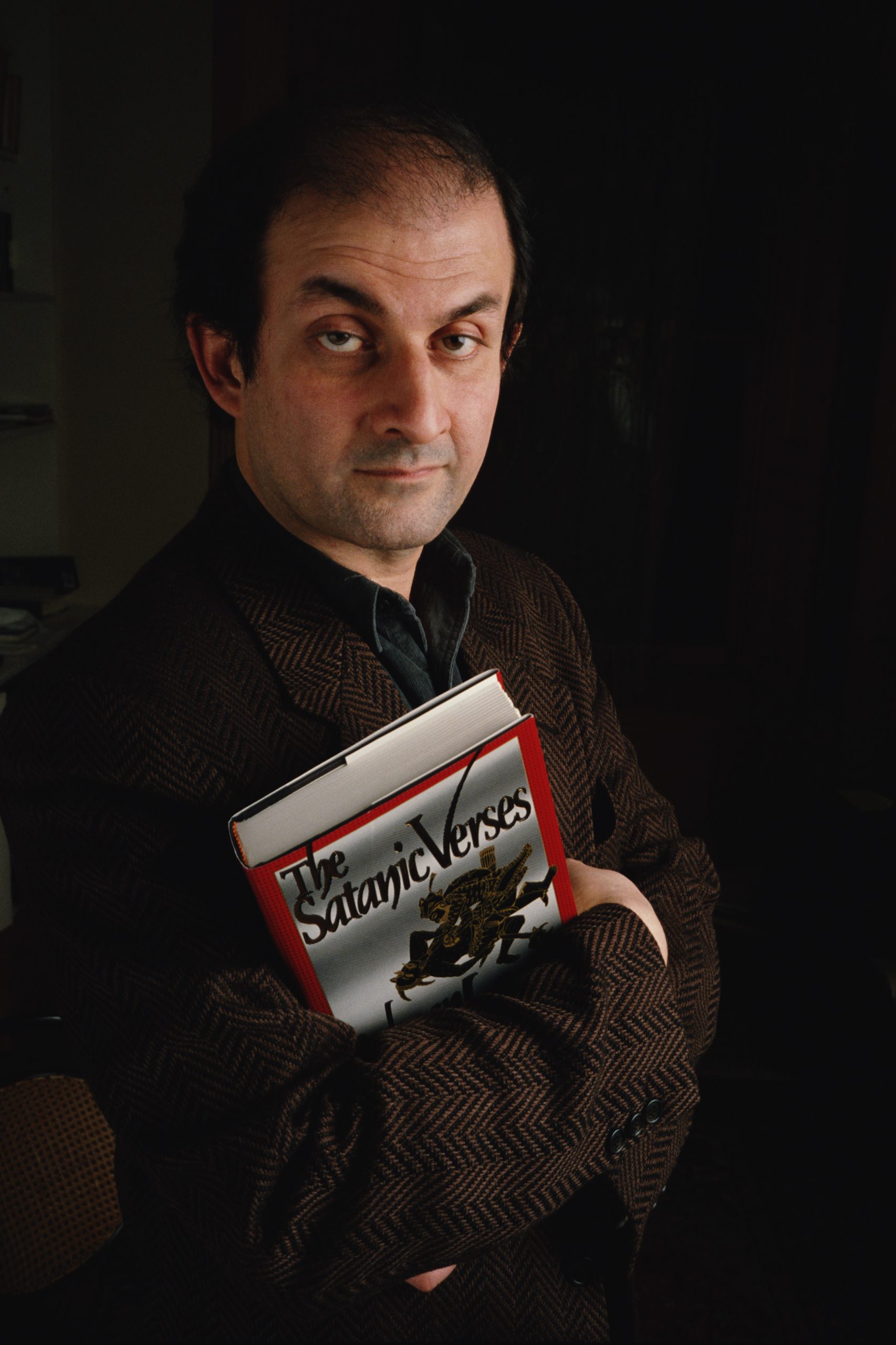
The Satanic Verses by Salman Rushdie
Criticised by some Muslims as blasphemous, magical realist novel The Satanic Verses has courted intense controversy since its publication in 1988, leading to its Indian-British author receiving death threats and requiring police protection. The book was banned in several countries, including India, Pakistan and South Africa. Such was the level of anger that a mass burning of the book took place the year of its publication in Bolton, Greater Manchester, and in Bradford in 1989. This was followed by the Iranian leader, Ayatollah Khomeini, ordering the death of Rushdie and his publishers.
On the one hand he’d won the Whitbread Award for the novel, which was praised by critics, yet on the other, facing very real death threats. Salman Rushdie had to go into hiding. Bookshops in the UK and US who stood up for freedom of speech and chose to stock the book faced the fear of fire bombings and other attacks. Despite Rushdie on several occasions delivering an apology over the years that followed, it wasn’t accepted and the death threat remained in place. An assassination was attempted in 2022 during a public appearance in New York, in which Rushdie was stabbed several times and blinded in one eye.
In a curious case of mislaid documentation, the ban in India was finally lifted in 2024, after it was discovered that the original order couldn’t be traced and was therefore deemed invalid. The book has been stocked in Indian bookshops ever since with around a £19 price tag, but that apparently hasn’t put readers off from finally getting their hands on a legal copy of this most contentious work.
Harry Potter and the Philosopher’s Stone by JK Rowling
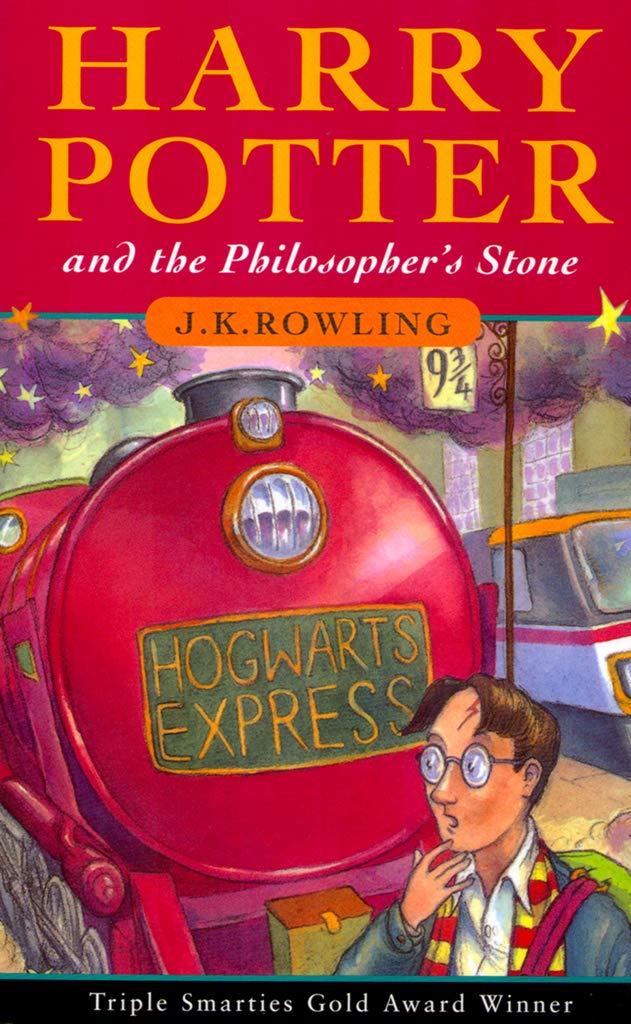
Well before the boycott of JK Rowling’s works over her gender-critical feminist stance, her first book in the wizarding Harry Potter series was banned in private schools in the United Arab Emirates. The ban was on the grounds that its supernatural theme was contrary to Islamic values. Bookshops were still allowed to sell it though.
In America, before 1999, most challenges to publications focused on sex or inappropriate language. The arrival of Harry Potter changed all that and forced the censors to consider glorified depictions of magic and the occult as well. Fearing that the wow-factor wizard would tempt impressionable kids to zap out spells and curses, the books were deemed dangerous. In fact, Harry Potter and the Philosopher’s Stone was one of the most challenged book in the US in 1999.
Famously, a pastor at St Edward Catholic school in Nashville, Tennessee allegedly believed that the spells and curses were real and could rouse evil spirits. He wrote to parents to tell them he’d been in contact with several exorcists who’d advised him to remove the books from school premises.
What the exorcists didn’t consider, though, is that this young orphaned wizard was happily responsible for a surge in reading, turning kids onto books, igniting their imaginations as well as a passion for a great yarn.

Nineteen Eighty-Four by George Orwell
Today, George Orwell appears like some kind of seer when he ‘predicted’ in his 1949 novel that the world would one day be controlled by ‘Big Brother’. At the time he actually meant it as a warning of what could happen if totalitarian ideas continued to develop along their natural course.
In this grimly fascinating masterpiece, Britain is now known as Airstrip One and is controlled by the Party, led by Big Brother. The Thought Police crack down on any individual thinking, while The Ministry of Truth is on a mission to rewrite history.
Various totalitarian regimes have taken offence at the book, namely the Soviet Union who banned it until 1988. Ironically, in 2022 it was one of Russia’s most downloaded books. In the US it has been removed from some schools for its political themes and sexual content.

The Witches by Roald Dahl
Children who grew up reading and hearing Roald Dahl’s fantastical stories were exposed to some pretty ghastly characters – warring couple, The Twits; horrible grandma in George’s Marvellous Medicine; and greedy farmers Boggis, Bunce and Bean in Fantastic Mr Fox. But the level of fear pervading in The Witches is next level.
Roald Dahl had a particular macabre sense of humour, and thought nothing of writing stories for children that would scare them silly. The Witches revolves around a seven-year-old boy, who stumbles across a huge convention of witches in the hotel he is staying in, and ends up being turned into a mouse by the frankly terrifying Grand High Witch.
For saying only women could be witches, Dahl has been branded a misogynist. This is despite his very engaging portrayals of women and girls in many of his books – Matilda and Miss Honey spring to mind in Matilda, Sophie in The BFG, Charlie’s mother in Charlie and the Chocolate Factory, and the boy’s grandmother in The Witches. Banned in some UK libraries for misogyny and in some US states for glorifying occultism and being derogatory to children, The Witches presses several panic buttons.
Lolita by Vladimir Nabokov
This 1955 novel tells the story of middle-aged professor Humbert Humbert, and his disturbing obsession with his 12-year-old step-daughter, Dolores, who he nicknames ‘Lolita’. The book’s ability to shock is as powerful and pertinent today as it was 70 years ago. It was banned in the UK for many years, as well as Argentina, Canada, France, New Zealand, South Africa, Australia, Belgium and Austria. Despite its controversy and The New York Times damningly calling it ‘dull, dull, dull… repulsive… highbrow pornography’, surprisingly it wasn’t banned nationwide in the United States.


